
Eußenheim

Bavaria, Germany
About the Project (ID: DE00225)
The Gemeindewald Eußenheim is a forest carbon project in Germany, located on the Franconian Plateau, a region increasingly exposed to drought and heat stress.
Through improved forest management (IFM), the project strengthens climate-resilient mixed forests by promoting natural regeneration, reducing harvesting pressure, and selectively supporting climate-tolerant tree species.
This approach enables long-term carbon storage and the generation of high-quality carbon credits while safeguarding existing forest carbon stocks.

Registry
Want to find out how many credits are already in the registry?

PDD
Download the Project Design Document (PDD).

Verification Report 2025
Open the latest verification report of the project.
Pictures
Do you have any questions or want to learn more about the projects?
Project Statistics
The forest area in Eußenheim is characterized by a high share of deciduous tree species, with oak and beech forming the backbone of the current forest structure.
The project builds on this strong starting point by further promoting diverse and climate-resilient mixed forests. Deciduous species, in particular oak, beech and other broadleaved species, remain the dominant component of the forest, while their structural and spatial mixing is gradually enhanced.
Coniferous species continue to play a complementary role. The share of pine is maintained at a moderate level and gradually reduced where appropriate, while other coniferous species such as Douglas fir and larch are selectively integrated to support stand stability and risk diversification.
Forest development follows an Improved Forest Management (IFM) approach with a clear priority on natural regeneration. Targeted planting is applied only where necessary to support site-adapted species composition and long-term forest resilience.
See how the project evolved:
Project Start: Kick-Off for Climate-Optimized Management.
The adapted management approach is integrated into operations, and the first project activities are planned.
Inventory: Forest Tree Measurements
Measurement data from the forest form the basis for precise project planning and for determining climate benefits.
Validation & Verification Audit: In-Depth Review of the Project
TÜV Rheinland assesses the project against all standard requirements, reviews compliance with activities, and defines the scope on which the first eva certificates will be issued.
Credits are ready to sell
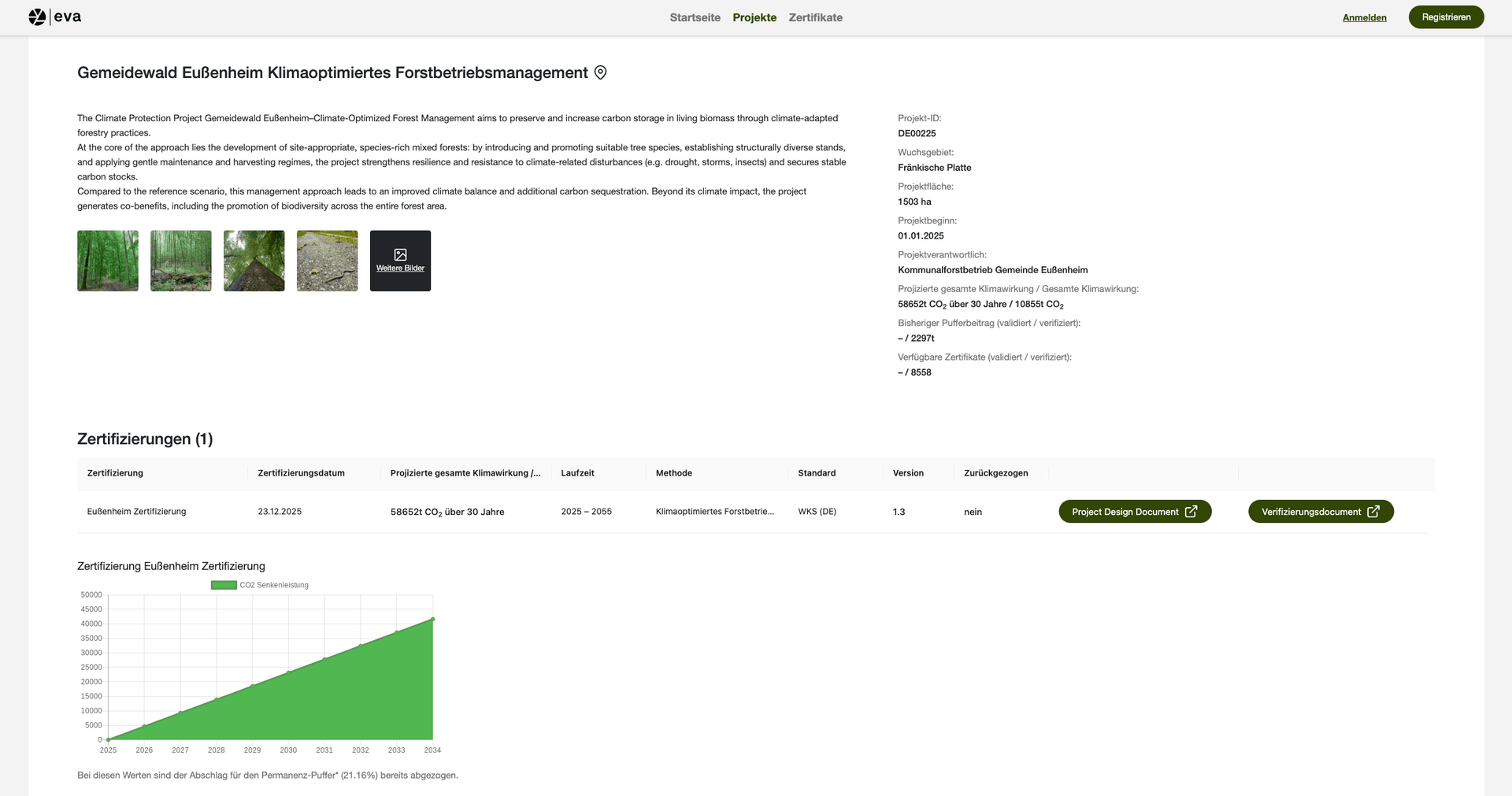
After TÜV Rheinland verified all credits, the credits are now ready to sell. Due to pre-purchase agreements we might not have any credits from Eußenheim left. If you are, however, interested in the credits of Eußenheim please contact us and we will provide more information.
This project contributes to the following United Nations Sustainable Development Goals:




Real Impact. Independently Verified.
Our projects combine rigorous science, advanced monitoring, and full transparency to deliver lasting climate value.
Other Projects
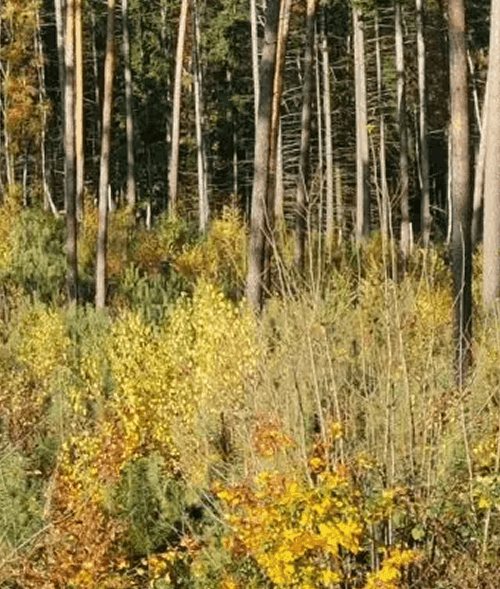
Raben, Brandenburg
- Project area: 958 ha
- Project duration: 2024–2054
- 2,450 credits generated and marketed within 10 months
 Learn more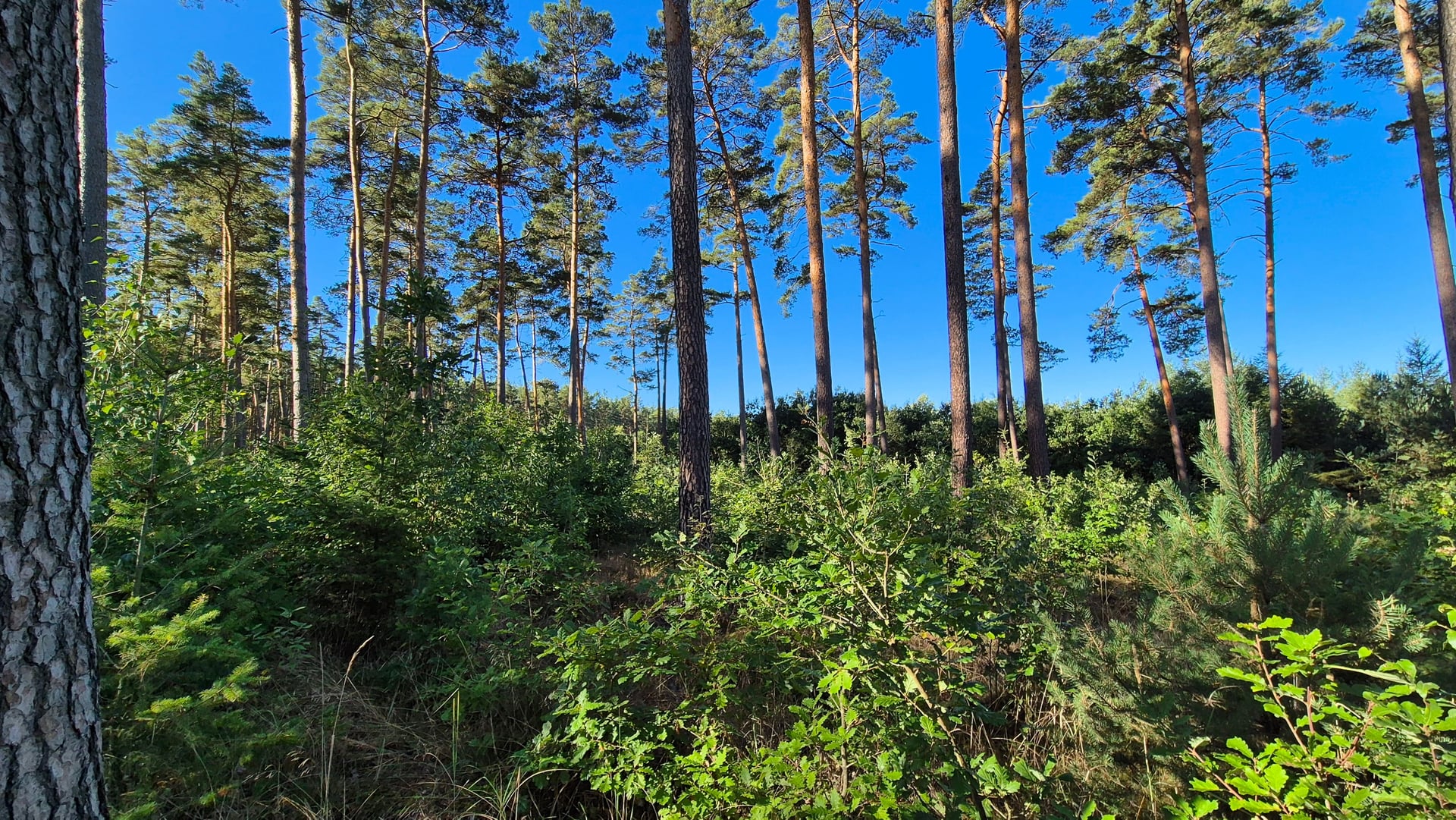
Nonnenheide
- Project area: 596 ha
- Project duration: 2025–2055
- 1,875 credits generated in 2026
Learn more